
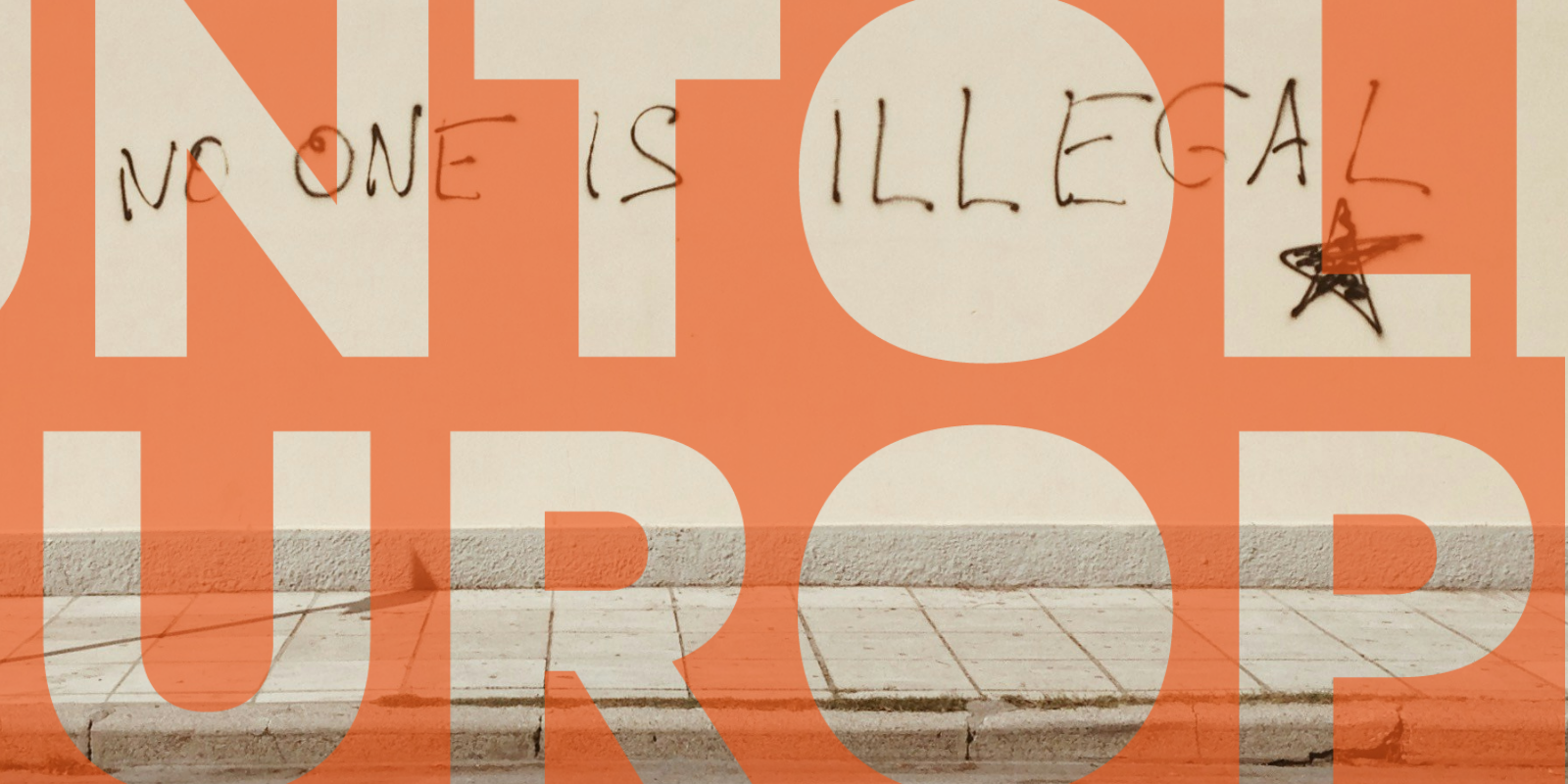
FROM PERCEPTIONS AND SOCIAL LISTENING TO A DECOLONIAL PERSPECTIVE
When? – Wednesday, April 15, 2026. From 09:30 hours.
Where? – Auditorium of the National Museum of Anthropology C. de Alfonso XII, 68, Retiro, 28014 Madrid
Why? – This event is part of a series of activities of the UNTOLD Uncovering Neglected Truths and Outlining Legacies of Decolonization project funded by the European Union and led by Oxfam Intermón with collaborators from different countries of the European Union.
Throughout this day we want to put on the table several dimensions of knowledge and analysis on the question: how are narratives about the migrant population constructed?
The construction of social perceptions of migrants and migratory movements is conditioned by the public narratives and narratives that circulate in the political, media and social space. The way in which the media, institutions, social organizations and digital networks construct and transmit the migratory narrative contributes to shaping a certain idea of the reality that surrounds us, but can we make an analysis of migration without making a process of memory?
To understand contemporary narratives on migration, it is essential to place them in a broader historical and political framework, marked by the legacy of coloniality.
Current representations of migrants, especially those racialized, cannot be separated from historical processes such as European colonization, the transatlantic trafficking of black Africans, and the construction of racial hierarchies that have structured the world order for centuries.
These hierarchies did not disappear with the formal end of colonial empires, but continue to operate through what numerous academic and social analyses have called the coloniality of power: a system that produces and reproduces global inequalities, legitimizing the dehumanization of certain groups.
In this context, migrations become a central element of contemporary narratives where Negrophobia and Islamophobia are not isolated expressions of individual prejudice, but manifestations of a broader system: structural racism, which defines who is considered human, who legitimately belongs to the European space and who is perceived as a threat, a delinquent or illegal.
Anti-migration narratives have been worryingly integrated into the European public agenda in recent years. This phenomenon has several consequences.
On the one hand, it contributes to generating a social climate of mistrust and rejection towards migrants and refugees, making invisible both their diversity and the multiple contributions they make to host societies.
On the other hand, it hides the structural causes of contemporary migrations, including global inequalities, conflicts, the impact of international economic policies or the persistent consequences of colonial history.
Moreover, these narratives do not operate only in Spain or Europe, but are part of broader dynamics that are reproduced with local particularities in different contexts, such as the United States or other territories of the Global North. In all these spaces, racism functions as a structural system that organizes social, political, and economic relations, producing discourses that legitimize policies of exclusion, control, and securitization of borders.
It is essential to ask who benefits from these narrative frameworks and what interests sustain their reproduction. Anti-migration narratives not only shape social perceptions, but also legitimize certain public policies, reinforce political projects based on fear and exclusion, and divert attention from other structural problems. At the same time, they contribute to normalizing hate speech and questioning fundamental principles of human rights that seemed widely agreed upon.
Faced with this context, it is essential to promote spaces for critical reflection and dialogue that allow the dominant narratives to be questioned. This involves not only analyzing how social perceptions are constructed, but also identifying the historical, political, and cultural frameworks that sustain them, as well as amplifying the voices and experiences of migrants and racialized people themselves. Only through this process will it be possible to move towards more just, complex and rights-based narratives, capable of contributing to more egalitarian and inclusive societies.
AGENDA
09:30 – 10:00 – Reception of those attending
10:00 – 10:30 – Opening of the conference
Irune Aguirrezabal, member of the Board of Trustees of Oxfam Intermón, Director of the Ibero-American Program on Human Rights, Democracy and Equality of the Organization of American States (OEI)
10:30 – 12:00 – Perceptions on migration. Reflections and dialogue from studies and research.
Participants:
-
- Luis Aguado, Associate Director for Spain and European Projects, More in common
-
- Federico Abizanda, member of the Board of the Peace Research Seminar Foundation
-
-
Paula Cáceres, journalist, head of
Advocacy at AlgoRace, columnist in various media.
-
-
- César Santamaria, expert in narratives and migrations Oxfam Intermón.
Moderator: Marita Zambrana Vega – Project Manager UNTOLD Europe – Oxfam Intermón
12:00 – 12:30 – Coffee break
12:30 – 14:00 – Legal frameworks, institutional responsibility and response to racism, hate speech and disinformation. Reflections from the legal and public policies.
Participants:
-
- Pastora Filigrana, lawyer and director of Action Against Hate
-
- Youssef M. Ouled, journalist, co-author of Living Against Racism and coordinator of AlgoRace
-
- María Teresa Verdugo, Chair of the Independent Authority for Equal Treatment and Non-Discrimination (AINODI)
-
- Ernesto García, coordinator of the Knowledge Unit in the Socio-Economic Justice Division of the Programmes, Citizenship and Policy Advocacy Department at Oxfam Intermón.
Moderator: María José Gascón – Lead Socio-economic Justice at Oxfam Intermón
14:00 – 15:00 – Lunch
15:00 – 16:30 – Narrative frameworks on migration: social networks, media, culture and education.
Participants:
-
- Moha Gerehou, anti-racist journalist collaborates in “Todo es mentira” and Aragón TV
-
- Line Hougaard Andersen y Leviathan Milan Boham University study “Narratives on migration in the media in pre-election periods” (research for Denmark, the Netherlands and Spain)
-
- Andrea Pacheco, curator and researcher of contemporary art of
Chilean origin.
- Andrea Pacheco, curator and researcher of contemporary art of
Moderator: Jessica Romero – Head of Media and Social Networks Oxfam Intermón
16:30 – 17:00 – Coffee break
17:00 – 18:30 – Construction of migratory narratives from self-determination and political agency. Reflections and dialogues from civil society
Participants:
-
-
Gabriel Zapata of Conciencia Afro a cultural proposal, focused on vindicating, celebrating and disseminating the realities and knowledge of the black, African and Afro-descendant community from Spain.
-
-
- Julissa Jauregui, an expert in migration, anti-racist activist linked to different historical processes of the migrant struggle in Spain.
-
- Paula Domingo of Asociación ELIN, an organization focused on justice and the protection of the rights of migrants.
-
- Erik Guerrero of Frente Migrante, a space for anti-racist political-cultural thought and action. Formed by migrant citizens in Spain.
Moderator: Rodrigo Barahona – Lead Strategy, knowledge and learning at Oxfam Intermón
RESERVE YOUR PLACE (SPACES ARE LIMITED)