Decolonising cooperation: discomforts, learning, and horizons for transformation

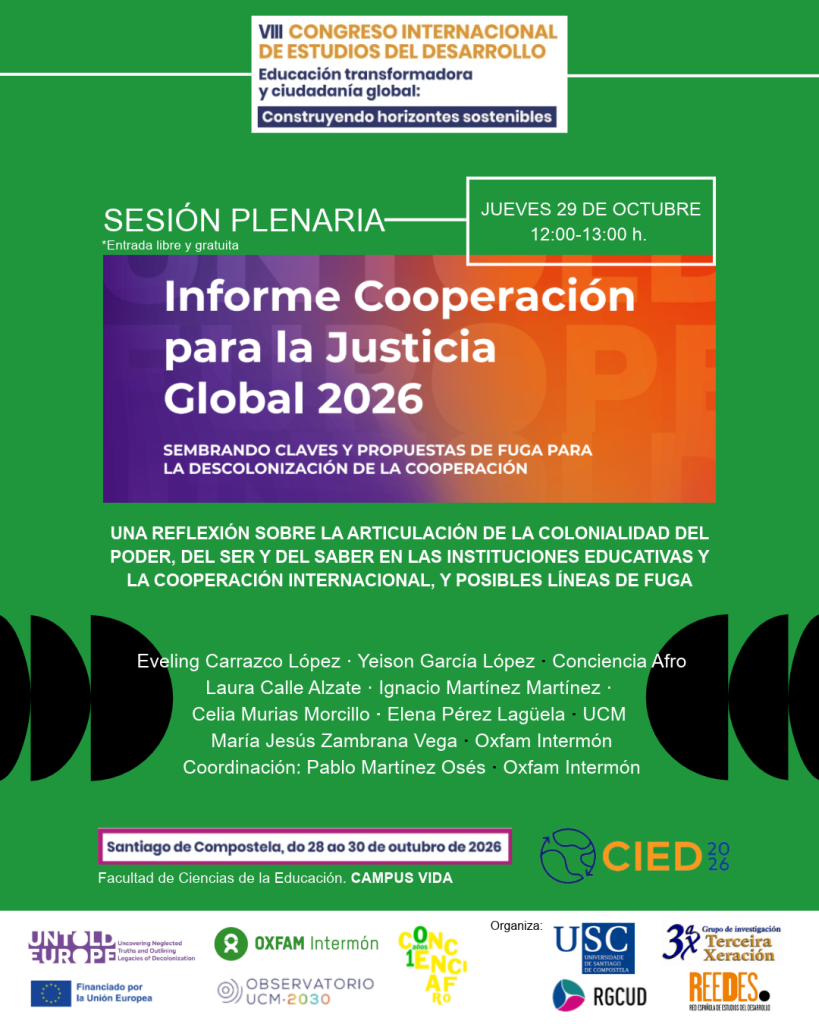
On May 21, the webinar “Decolonizing cooperation: discomforts, ruptures and learning” took place as part of the UNTOLD Europe project. The event brought together diverse voices from institutions, academia, and social movements to critically rethink international cooperation in a global context marked by deep inequalities. 

A starting point: global crisis and the need to rethink cooperation 

The session opened with a reflection on today’s global context: a world of growing inequality, where wealth and political power are increasingly concentrated while international cooperation and the multilateral system are under pressure.  

“What we propose is to collectively build a transformed cooperation with a rebalancing of power and the political courage to change the system.”


In this context, the urgency not to abandon cooperation, but to fundamentally transform it, towards more just, solidarity-based models aligned with global justice. 

A collective reflection process from the Global South 

The report presented during the event developed by the “ephemeral team” is the result of four years of collective work with feminist activists and organizations from the Global South.  

This process identified key structural critiques of the current cooperation system: 

  • The persistence of power relations rooted in colonial histories 
  • The imposition of agendas from the Global North 
  • Bureaucratic barriers and restrictive funding conditions (“bureau-repression”) 
  • The depoliticization of social struggles when adapted to funding logics  

“This model of cooperation carries a colonial legacy that structures economic dependency and imposes agendas.”


Rather than offering definitive answers, the report serves as a point of inflection, emphasising the importance of embracing discomfort as a necessary condition for transformation. 

From diagnosis to proposals: repair as a horizon 

One of the main shared conclusions emerging from the discussion was the need to reframe cooperation through the lens of historical repair. 

This perspective calls for: 

  • Recognizing current inequalities as the result of colonial processes 
  • Building more horizontal, trust-based partnerships 
  • Redistributing decision-making power 
  • Valuing and strengthening knowledge from the Global South  


“The horizon is the action of repair a historical debt.”


At the same time, important questions remain open: What does “repair” actually mean? Who defines it? How can it avoid becoming another form of colonial practice? 

These questions highlight the need to further clarify and operationalize this concept. 

Institutional tensions and challenges for change 

Speakers from institutional contexts shared both progress and limitations in transforming cooperation systems: 

  • Political and structural resistance persists in addressing Europe’s historical responsibility 
  • Legal and administrative frameworks hinder deeper transformations in funding and power relations 
  • There is an ongoing tension between building truly shared agendas and responding to domestic political pressures in donor countries  

Despite these challenges, promising approaches were highlighted, including network-based collaboration, more flexible funding mechanisms, and the integration of feminist and decolonial perspectives into public policy. 

Opening questions to drive transformation 

The closing interventions stressed the importance of avoiding simplistic answers. 

Key reflections included: 

  • Decolonisation is not only an individual process, but a structural one 
  • Cooperation is embedded in global power systems 
  • Repair should focus on preventing the reproduction of inequalities and violence  

Ultimately, the event reaffirmed the need for spaces of dialogue that are both critical and uncomfortable, capable of questioning existing systems and collectively imagining alternatives. 

 Main Conclusions 

  • Discomfort is necessary to transform a cooperation system shaped by colonial relationships. 
  • Cooperation must be rethought through the lens of historical repair, not as aid but as a response to an extractive system. 
  • Decolonization cannot remain at the level of discourse; it must translate into real changes in power and funding. 
  • Transforming cooperation requires embracing tensions and redefining it as repair, without abandoning it. 
  • There is a gap between discourse and practice, and a structural tension that is difficult to resolve within the system itself. 
  • Without historical recognition and conceptual clarity, decolonisation risks being superficial or even harmful. 
  • Decolonization requires deep structural changes and a political positioning in relation to power. So, ¿Can we decolonize cooperation without questioning the colonial structures? The answer is no. 
Socialización de la Sistematización de aprendizajes del Equipo Efímero de Decolonialidad de Oxfam. (1080 x 1080 px) (600 x 800 px)

reflexión de la decolonialidad feminista

Este documento es la sistematización de aprendizajes de un proceso de cuatro años, en el que un grupo interno de feministas de Oxfam en América Latina y el Caribe —el equipo efímero— ha construido y tejido saberes, reflexiones y sabidurías en torno a la relación entre cooperación y decolonialidad. A lo largo de este camino se desarrollaron diversas acciones: webinarios, documentales, fanzines, encuentros presenciales, podcasts, diálogos políticos y una Investigación Acción Participativa (IAP).

Estos espacios implicaron una conversación profunda tanto con feministas decoloniales de Abya Yala como con personal interno de Oxfam, atravesando incomodidades, dolores y también gozos en el intento de decolonizar la cooperación.

Share:

You may also like